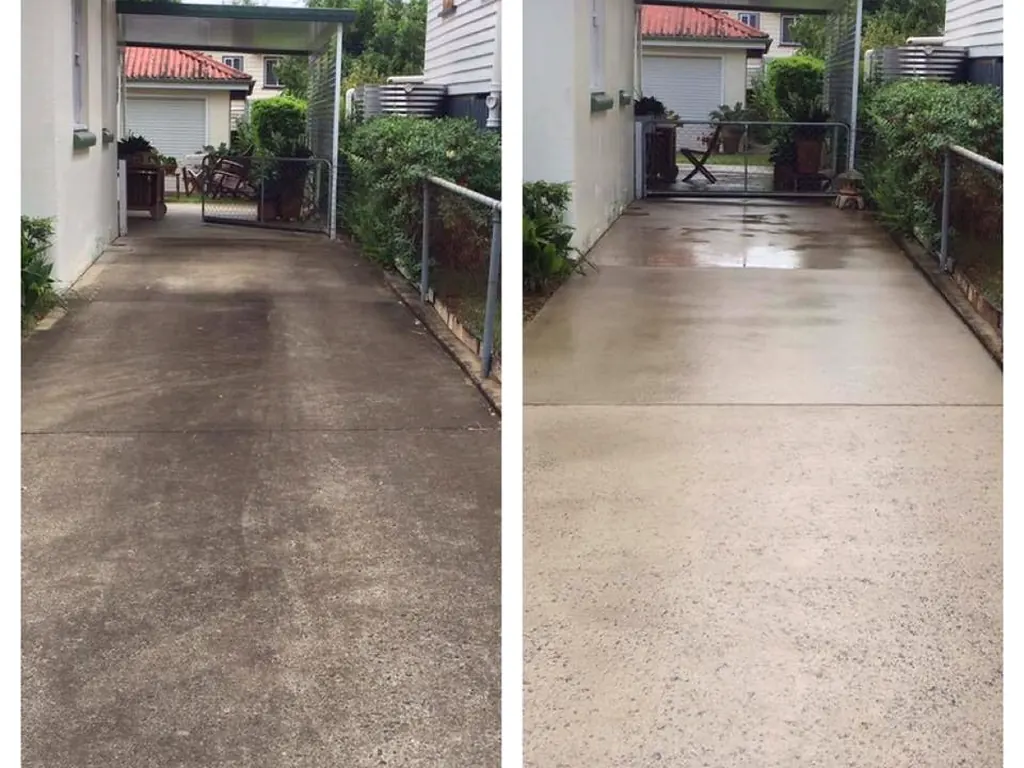
Short answer
To get an oil stain out of concrete, act fast: soak up any wet oil with an absorbent such as kitty litter, then scrub the spot with a degreaser made for concrete and rinse it off without sending the dirty water down the stormwater drain. Fresh spills often lift completely. Old stains that have soaked deep into the concrete usually need a stronger degreaser, a few rounds, or a hot water pressure clean, and may fade rather than vanish.
Key points
- Speed matters most: oil keeps soaking into concrete for as long as it sits there.
- Absorb first, degrease second, rinse last. Scrubbing a wet spill just spreads it.
- Old, set-in stains often need hot water and a commercial degreaser, and may only fade.
- Exposed aggregate, coloured and sealed concrete need a gentler approach.
- In Brisbane, driveway cleaning runoff counts as water pollution, so keep it out of the drain.
- Sealing a clean driveway helps stop the next drip soaking in.
Why oil stains are so hard to get out of concrete
Concrete looks solid, but it is full of tiny pores. Oil seeps into those pores and keeps travelling down and outwards, which is why a small drip under the car can turn into a dinner plate sized stain over a few weeks.
Brisbane's hot sun makes it worse. Heat thins the oil so it soaks in further, then bakes the top layer dark. The longer a stain sits, the deeper it goes and the harder it is to get out.
First, work out what kind of stain you have
The right fix depends on how old the stain is and what the driveway is made of. Use this as a quick guide before you buy anything.
| What you see | What it usually means | Best first step |
|---|---|---|
| Wet, shiny puddle | Fresh spill, still on the surface | Absorb it straight away, then degrease |
| Dark patch, dry to touch, a few weeks old | Oil has soaked in but not set | Concrete degreaser, scrub, repeat if needed |
| Large, dark, faded edges, months or years old | Deep, set-in stain | Hot water pressure clean with a commercial degreaser |
| Stain on exposed aggregate (pebblecrete) | Oil sitting around the stones | Gentle degreasing, no high pressure close up |
| Stain on a sealed or painted driveway | Oil may be on top of the coating | Mild degreaser only; harsh cleaners can damage the seal |
Oil stains on concrete: what you are dealing with and what usually works
Wet, shiny puddle
- What it usually means:
- Fresh spill, still on the surface
- Best first step:
- Absorb it straight away, then degrease
Dark patch, dry to touch, a few weeks old
- What it usually means:
- Oil has soaked in but not set
- Best first step:
- Concrete degreaser, scrub, repeat if needed
Large, dark, faded edges, months or years old
- What it usually means:
- Deep, set-in stain
- Best first step:
- Hot water pressure clean with a commercial degreaser
Stain on exposed aggregate (pebblecrete)
- What it usually means:
- Oil sitting around the stones
- Best first step:
- Gentle degreasing, no high pressure close up
Stain on a sealed or painted driveway
- What it usually means:
- Oil may be on top of the coating
- Best first step:
- Mild degreaser only; harsh cleaners can damage the seal
How to clean a fresh oil spill on a driveway
A fresh spill is the one you have the best chance of beating completely. Do not hose it, as water just spreads the oil across a bigger area.
- Cover the spill with an absorbent. Clay kitty litter, sawdust or a purpose made oil absorbent all work.
- Grind the absorbent in with your shoe and leave it for a few hours, or overnight for a big spill.
- Sweep it up and bag it for the bin. Do not sweep it into the garden or the gutter.
- Scrub what is left with a concrete degreaser and a stiff nylon brush, following the product label.
- Rinse lightly, soaking up the rinse water with rags or more absorbent rather than letting it run to the street.
Quick tip
Keep a bag of kitty litter in the garage. It is cheap, it works, and having it on hand is the difference between a spill you can lift and a stain you live with.
How to get old oil stains out of concrete
Old stains are a different job. The oil is well below the surface, so household products like dishwashing liquid or baking soda will usually only lighten the top.
- Use a degreaser made for concrete and give it the full dwell time on the label. Most of the work happens while it sits.
- Expect to repeat it. Deep stains often need two or three rounds, letting the concrete dry in between.
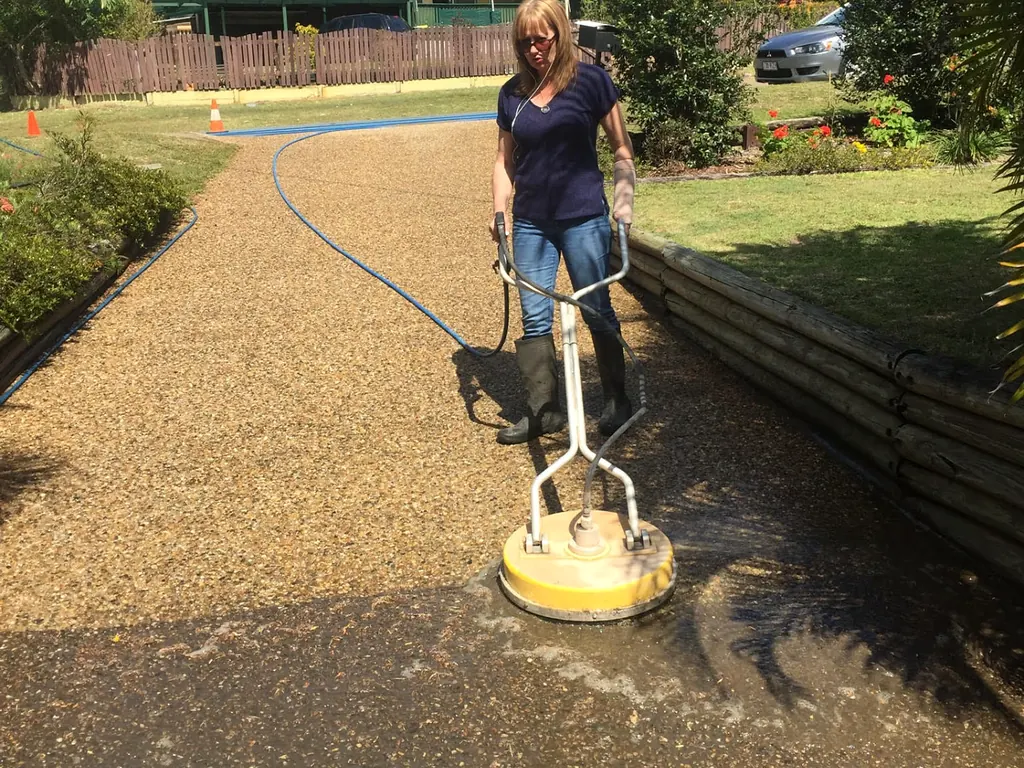
- Hot water makes a big difference. Oil softens and lifts far more easily with heat, which is why professional crews use hot water pressure cleaning on oil and grease.
- Be realistic. Very old stains that have soaked deep into the concrete usually fade a long way but may not disappear completely.
What not to do
A lot of the advice online does more harm than good. Steer clear of these:
- Petrol, kerosene or other fuels. They are a fire risk, they can spread the stain, and they are a pollutant in their own right.
- Strong acids, such as hydrochloric (pool) acid, used without knowing the surface. They etch concrete and can strip coloured or sealed finishes.
- A hired high pressure wand held close to the surface. It can etch the concrete, leave stripes or pull stones out of exposed aggregate, and that damage is permanent.
- Washing everything into the gutter. Oil, degreaser and dirty water all end up in Brisbane's creeks and the bay.
Brisbane rule of thumb: keep it out of the stormwater drain
Stormwater drains are not connected to a treatment plant. Whatever goes into the gutter flows straight to local creeks, the river and Moreton Bay.
Brisbane City Council lists driveway cleaning runoff among the types of water pollution it investigates. Soak up oily residue with absorbents and bin it, and keep rinse water on the property, such as on a lawn away from garden beds, rather than letting it run to the street.
Exposed aggregate, coloured and sealed driveways
Exposed aggregate (pebblecrete) is one of the most common driveway finishes in South East Queensland. The stones are held in by the cement around them, so scrub gently and never blast them up close.
Coloured and stencilled concrete can fade with harsh chemicals, and a sealed or painted driveway can be damaged by strong solvents. On these surfaces, start with the mildest degreaser that does the job and test it on a hidden spot first.
When it is worth getting a professional driveway clean
DIY is fine for a fresh drip. A professional clean is usually worth it when:
- The stain is old, large or has already beaten a couple of rounds of degreaser.
- There are several stains, plus tyre marks or black mould, across the driveway.
- Cleaning one spot would leave a bright clean patch on an otherwise grubby driveway.
- You are selling, leasing or handing back a rental and need the driveway to look its best.
- The surface is exposed aggregate, coloured or sealed and you do not want to risk damaging it.
Waterworx pre-treats oil and tyre marks, uses hot water and degreasers suited to the job where oil and grease are present, and cleans the whole driveway with a rotary surface cleaner for an even, stripe free finish. We will tell you honestly before we start how much a very old stain is likely to fade.
How to stop oil stains coming back
- Fix the leak. A drip tray or a piece of cardboard under the car is a cheap stopgap until it is repaired.
- Deal with spills the same day, using the absorb, degrease, rinse steps above.
- Seal the driveway once it is clean. A sealer helps oil and spills sit on the surface instead of soaking in, so they wipe up far more easily.
Related services
Frequently asked questions
Does kitty litter really work on oil stains?
Yes, on fresh spills. Clay kitty litter soaks up oil that is still wet on the surface. It will not pull out a stain that has already soaked in and dried, so follow it with a concrete degreaser.
Can you get old oil stains out of concrete?
Often a long way, but not always completely. Deep, years-old stains usually fade with a commercial degreaser and hot water pressure cleaning, but some shadow may remain.
Will pressure washing remove oil from concrete?
Cold water alone rarely shifts oil. A degreaser plus hot water pressure cleaning is far more effective, and a rotary surface cleaner gives an even result without stripes.
Is it okay to wash oil into the gutter?
No. Stormwater drains run straight to creeks and the bay, and Brisbane City Council treats driveway cleaning runoff as water pollution. Soak up oily residue and bin it.
Should I seal my driveway after cleaning it?
Sealing is worth considering once a driveway is clean, especially for exposed aggregate and coloured concrete. It helps stop oil soaking in and makes future spills easier to clean.
Helpful references
References are shared as general manufacturer guidance only and do not indicate endorsement of, or by, any brand.