Short answer
There is no universal calendar for oiling a deck. Timing depends on how much sun, rain, shade and foot traffic the boards get and on the product already on them. The sensible approach is to clean the deck, look closely at the timber and the old finish, and then decide whether it needs a recoat or simply a wash.
Key points
- Grime, greying, worn finish and peeling coating look similar from a distance but need different responses.
- Different parts of the same Brisbane deck often age at different rates.
- Cleaning freshens a deck but does not replace a protective finish.
- Follow the chosen product's label for preparation, application and cure times.
Reading the signs: dirt, greying, worn finish or peeling
Before anyone talks about oil or stain, it helps to work out what you are actually looking at. A deck that looks tired can simply be dirty, or the timber may have weathered to grey, or the old coating may have worn through or started lifting. Each situation points to a different next step.
| What you see | Possible cause | Sensible next step |
|---|---|---|
| Dark film, dust or green tinge that changes when wet | Surface dirt, pollen, mould or algae | Clean first, then reassess the timber once dry |
| Silvery grey boards with a dry, fibrous feel | UV weathering of unprotected or worn timber | Clean and assess whether a recoat suits the boards |
| Patchy colour, bare spots in walkways and steps | Finish worn by foot traffic and sun | Clean, then plan a compatible maintenance coat |
| Flaking, peeling or cracked film | Coating failure or incompatible layers | Get it assessed; removal may be needed before recoating |
| Soft, spongy or crumbling boards, wobbly rails | Cannot be confirmed by appearance alone | Stop and have a qualified carpenter or builder inspect |
Common deck signs and sensible next steps
Dark film, dust or green tinge that changes when wet
- Possible cause:
- Surface dirt, pollen, mould or algae
- Sensible next step:
- Clean first, then reassess the timber once dry
Silvery grey boards with a dry, fibrous feel
- Possible cause:
- UV weathering of unprotected or worn timber
- Sensible next step:
- Clean and assess whether a recoat suits the boards
Patchy colour, bare spots in walkways and steps
- Possible cause:
- Finish worn by foot traffic and sun
- Sensible next step:
- Clean, then plan a compatible maintenance coat
Flaking, peeling or cracked film
- Possible cause:
- Coating failure or incompatible layers
- Sensible next step:
- Get it assessed; removal may be needed before recoating
Soft, spongy or crumbling boards, wobbly rails
- Possible cause:
- Cannot be confirmed by appearance alone
- Sensible next step:
- Stop and have a qualified carpenter or builder inspect
Appearance alone cannot confirm rot or structural problems. If a board feels soft underfoot, a fixing has pulled out, or balustrades move, treat that as a job for a qualified carpenter or builder before any cleaning or coating happens.
Why Brisbane decks age unevenly
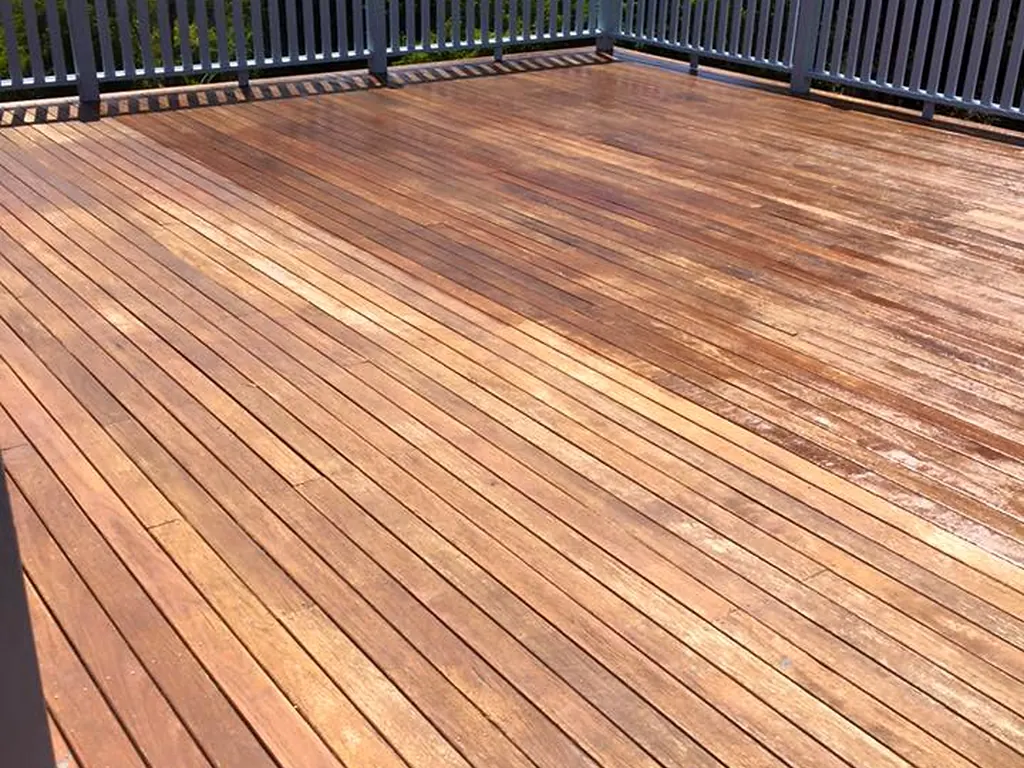
Brisbane's strong sun dries and greys exposed boards, while wet spells and humid summers encourage mould and algae in the shady corners. The result is that one deck can have three different conditions at once: a sun-bleached section near the edge, a slippery green patch under a tree or beside a wall, and a worn track from the back door to the barbecue.
That is why judging a whole deck by its best or worst section can be misleading. Look at the sunny side, the shaded side and the traffic paths separately. Pool surrounds, stairs and decks under gutters that overflow tend to need attention sooner than sheltered areas.
When cleaning is enough and when to think about a recoat
If the existing finish still has even colour, water still beads on most of the surface and the boards look healthy once the grime is gone, a clean may be all the deck needs for now. Cleaning removes dirt and organic growth, improves grip and lets you see the real condition of the timber.
Cleaning does not put protection back into the boards, though. When water soaks straight in, colour has faded to grey or bare patches appear in walkways, it is usually time to talk about a maintenance coat. Where the old film is peeling, recoating over it rarely ends well, and an assessment of whether stripping or sanding is required is the safer path.
A sensible preparation sequence
Good results come from preparation more than from the final coat. A typical sequence looks like this:
- Check safety and access, including loose or protruding fixings, soft boards and unstable rails. Structural repairs belong with a carpenter or builder.
- Identify the timber where possible and what product was used last time, as this guides which cleaner and coating are compatible.
- Clear furniture and pot plants, and protect nearby walls, glass, garden beds and paving from overspray and runoff.
- Use a cleaner suited to the timber and the problem, applied according to its label.
- Clean in a controlled way. Aggressive blasting can raise the grain, furr the surface and gouge softer boards.
- Let the timber reach the conditions the chosen coating asks for before applying it.
- Apply an oil or stain compatible with the existing finish, following the label for coverage, recoat and rain or foot traffic times.
Manufacturers are clear on the basics. For example, Intergrain's technical data for one of its deck oils asks for timber to be free of dust, mould and site contaminants before it is coated. That reference is shown only to illustrate why cleaning comes first; it is not a product recommendation.
Oil or stain: what actually matters
The words oil and stain overlap a lot on product shelves. Many decking oils are tinted, and many stains are oil based. What matters more is the colour you want, whether the product penetrates the timber or forms a film on top, and whether it is compatible with what is already there.
Layering a new product over an incompatible old one is a common cause of peeling and patchiness. Where the existing finish is unknown or failing, the deck may need stripping or sanding back before a new system goes on. That decision depends on the product and the condition of the boards, not a fixed rule.
Why we do not quote magic numbers
You will find plenty of advice online listing a set pressure, a home mixing recipe, a fixed number of drying hours or a rule that every deck must be oiled each year. Timber species, board age, coating type, weather and the specific product all change the answer. The product label and a look at your actual deck are a far better guide than a single number.
Checklist before you ask for a quote
- Rough size of the deck, plus any stairs, rails or a pool surround.
- A few clear photos of the whole deck, the worst areas and any peeling or bare spots.
- Which parts sit in full sun and which stay shaded or damp.
- What was last applied and roughly when, if you know.
- Access details, such as side gates, stairs and where water can drain.
- Whether you want a clean only or are thinking about a recoat.
Related services
Frequently asked questions
How often should a Brisbane deck be oiled?
There is no single interval that suits every deck. Exposure to sun and rain, foot traffic, the timber and the product used all affect how quickly a finish wears. Checking the deck regularly and recoating when water stops beading and colour fades is more reliable than a fixed calendar.
Do I need to clean my deck before oiling?
Yes. Coatings need a clean surface to soak in and bond. Dirt, mould and residue left on the boards can stop the product penetrating evenly and lead to a patchy result. Product labels generally list cleaning as a required preparation step.
Can I just clean my deck without recoating?
Often, yes. If the existing finish is still in reasonable condition, a clean can refresh the deck and improve grip. Just keep in mind that cleaning does not add protection, so bare or greyed areas will continue to weather until they are recoated.
My deck is peeling. Can it be oiled over?
Coating over a peeling film usually traps the problem and the new layer can lift with the old one. A peeling deck should be assessed to work out whether the old product needs to be removed by stripping or sanding before a compatible finish is applied.
Does Waterworx repair rotten boards?
Structural or rotten timber should be inspected and repaired by a qualified carpenter or builder. Once repairs are done, the deck can be cleaned and prepared for its new finish.
Helpful references
References are shared as general manufacturer guidance only and do not indicate endorsement of, or by, any brand.